
to leave a comment.
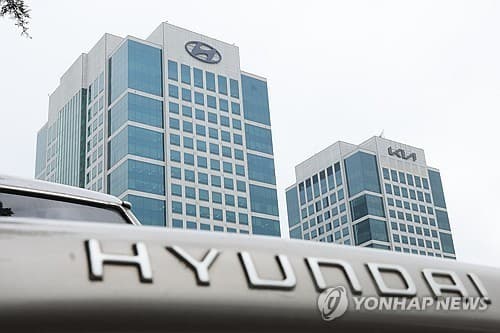
Operating profit for both companies expected to decrease by 23.3% and 22.6% respectively compared to the same period last year
Hyundai Motor and Kia are set to announce their first-quarter results this week, and both companies are expected to record sluggish performance due to increased tariffs and warranty provisions.
According to the automotive industry on the 22nd, Hyundai Motor and Kia will hold conference calls on the 23rd and 24th, respectively, to announce their Q1 results.
Yonhap News, analyzing recent three-month securities industry reports using the Yonhap Infomax system, projected Hyundai Motor's Q1 revenue and operating profit for this year to be 45.8923 trillion won and 2.7866 trillion won, respectively.
This represents a 3.3% increase in revenue and a 23.3% decrease in operating profit compared to 44.4078 trillion won in revenue and 3.6336 trillion won in operating profit during the same period last year.
Kia, a fellow group company, also does not have a bright outlook for the first quarter of this year.
Kia's projected Q1 revenue and operating profit for this year were tallied at 29.0602 trillion won and 2.3294 trillion won, respectively.
This is a 5.7% increase in revenue and a 22.6% decrease in operating profit compared to Q1 last year (revenue of 28.0175 trillion won, operating profit of 3.0086 trillion won).
Although both companies recorded favorable sales performance in the first quarter compared to other finished vehicle manufacturers, it is interpreted that US tariffs and increased warranty provisions offset the sales effect.
In the first quarter of this year, Hyundai Motor's global sales provisionally decreased by 2.6% year-on-year to 975,123 units, while Kia's increased by 0.8% to 779,169 units.
However, Hyundai Motor and Kia exported cars to the US duty-free until the first quarter of last year, and the resulting base effect was reflected in this year's Q1 performance.
US tariffs, imposed from April last year, were lowered from 25% to 15% starting November of the same year, but Hyundai Motor and Kia's Q1 tariff costs for this year are estimated to be approximately 2 trillion won.
In addition, the increase in the won/dollar exchange rate led to an increase in warranty provisions, which is analyzed to have negatively impacted operating profit. Warranty provisions, which are costs for free repairs, etc., are set in foreign currency and reflected in accounting.
Furthermore, supply disruptions due to the fire at engine valve component manufacturer Anjeon Industrial, sluggish sales in the Middle East due to the Iran war, and increased transportation costs are also interpreted to have adversely affected performance.
Lee Jae-il, a researcher at Eugene Investment & Securities, stated, "The first quarter of last year saw a significant pre-demand effect before the tariffs took effect, and this base effect will be reflected in this year's Q1 performance. There are also impacts from increased warranty provisions due to the rising year-end exchange rate and the Palisade recall."
Newsletter
Get key news delivered to your email every morning
to leave a comment.