
to leave a comment.
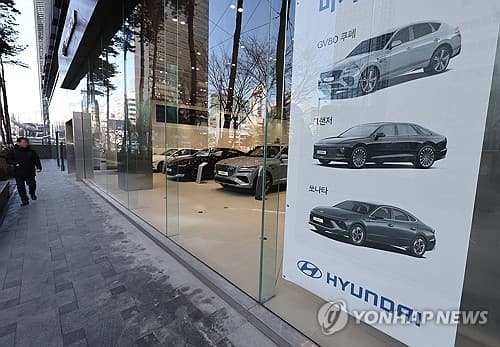
Despite record-high sales in Q1, operating profit fell 30.8%... Contingency plan strengthened
Hyundai Motor, the largest finished car manufacturer in Korea, saw its operating profit decrease by over 1 trillion won in the first quarter alone, due to the impact of geopolitical risks from US auto tariffs and the Middle East war.
However, sales of high-profit vehicle models such as hybrid electric vehicles (HEVs) and electric vehicles significantly increased, signaling a strong rebound after the crisis.
Hyundai Motor announced on the 23rd that its consolidated operating profit for the first quarter was tentatively tallied at 2.5147 trillion won, a 30.8% decrease compared to the same period last year.
Operating profit decreased by 1.1189 trillion won from 3.6336 trillion won in Q1 last year. The operating profit margin was 5.5%, down 2.7 percentage points from the same period last year. Net profit for the period was 2.5849 trillion won, a decrease of 23.6%.
Sales increased by 3.4% year-on-year to 45.9389 trillion won, marking an all-time high for a first quarter. However, profitability significantly declined due to US tariffs imposed since Q2 last year, reduced global market demand from the Middle East war, and rising raw material prices.
Tariff costs accounted for most of the decrease in operating profit in Q1, amounting to approximately 860 billion won. Losses due to mix and incentive effects were 337 billion won, and losses due to volume were 247 billion won, both having less impact compared to tariffs.
The increase in operating profit due to the high exchange rate was 25 billion won. While a high exchange rate is generally considered a favorable factor for Hyundai Motor Group's profitability, in the first quarter, it did not significantly contribute to profits as the rising exchange rate led to an increase in sales warranty provisions. Sales warranty provisions, which are costs for free repairs, etc., are set in US dollar terms and reflected in accounting.
However, Hyundai Motor boosted sales by expanding the sale of high-profit vehicle models such as hybrid and electric cars, which generate significant profits.
In the first quarter, eco-friendly vehicle sales increased by 14.2% year-on-year to 242,612 units, with their share of total sales reaching a quarterly high of 24.9%.
Hybrid vehicle sales increased by 27% to 173,977 units (17.8% of total sales), marking an all-time high for a quarter. Particularly in the US, sales of hybrid vehicles grew due to high oil prices, achieving a record-high share of 24.8% (up 8.5 percentage points) in the US market. The share of hybrid vehicle sales in the European market also increased from 20.3% last year to 27%.
Globally, sales showed strength, particularly in emerging markets such as India. By region (wholesale basis), sales in the Indian market increased by 8.5% to 167,000 units. In the Central and South American market, sales increased by 7.7% to 74,000 units, and in the US, by 0.3% to 244,000 units.
However, sales in the Africa and Middle East markets, directly affected by the war, decreased by 29.8% to 52,000 units. In the European market, where competition intensified due to the strong performance of Chinese brands, sales also fell by 7.8% to 140,000 units.
Hyundai Motor plans to strengthen its contingency plan, which has been in place since last year, to mitigate factors worsening profitability as much as possible. This is based on the outlook that an unpredictable business environment will continue, with ongoing US tariff imposition and the Middle East war, currently in a truce, yet to conclude.
Hyundai Motor aims to expand sales and enhance profitability through the launch of new vehicles and models with improved core product competitiveness, such as the Santa Fe and Tucson hybrids. The company also plans to respond flexibly to market changes by implementing customized strategies according to the varying pace of electrification transition in different regions.
Newsletter
Get key news delivered to your email every morning
to leave a comment.