
to leave a comment.
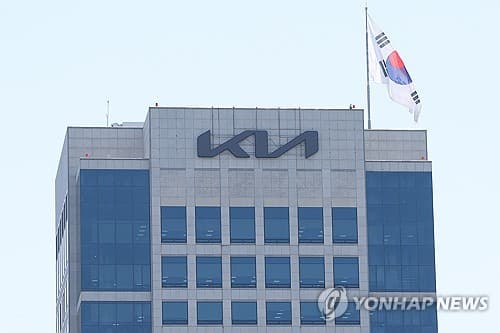
Hyundai-Kia Combined Hit by 1.6 Trillion Won in Tariffs… Sales Up in All Markets Except Middle East
Kia, the second-largest finished vehicle manufacturer in Korea, recorded its highest quarterly revenue, yet its performance significantly declined compared to the same period last year, impacted by US auto tariffs and the Middle East war.
Instead, Kia maximized efforts to offset the deteriorating performance by boosting sales of high-profit eco-friendly vehicles, including electric vehicles (EVs) and hybrids (HEVs), in the first quarter of this year, anticipating a rebound from the second quarter onwards.
Kia announced on the 24th that its consolidated operating profit for the first quarter was tentatively tallied at 2.2051 trillion won, a 26.7% decrease from the same period last year.
Operating profit decreased by 803.5 billion won compared to the first quarter of the previous year (3.0086 trillion won), and the operating profit margin fell by 3.2 percentage points to 7.5%. Net profit decreased by 23.5% to 1.8302 trillion won.
Revenue increased by 5.3% compared to the previous year, reaching 29.5019 trillion won, surpassing the previous record (29.3496 trillion won in Q2 last year) to set a new all-time quarterly high. However, profitability significantly worsened due to US tariffs imposed from April last year, increased incentives due to intensified competition, and the impact of a high exchange rate.
Nevertheless, Kia sold 779,741 units (wholesale basis), a 0.9% increase year-on-year, achieving its highest sales performance for a first quarter. It is evaluated that the company defended against the decline in demand caused by the global economic slowdown and war better than other brands.
The combined operating profit with its sister company Hyundai Motor (operating profit 2.5147 trillion won, 30.8%↓), which announced its results the day before Kia, recorded 4.7198 trillion won. This is a 28.9% decrease compared to the combined operating profit of 6.6422 trillion won in Q1 last year. The gap in operating profit between Hyundai and Kia in Q1 decreased by about half, from 625 billion won last year to 309.6 billion won this year.
Looking at the details of Kia's operating profit in the first quarter of this year, US tariff costs amounted to 755 billion won, accounting for most of the decrease. When combined with Hyundai Motor's tariff costs (860 billion won), both companies bore an additional cost of 1.615 trillion won in tariffs in Q1 alone.
Kia defended its performance by expanding sales of high-profit vehicle types such as electric vehicles and hybrid cars, which generate significant profits even with lower sales compared to other vehicle types.
In the first quarter, eco-friendly vehicle sales increased by 33.1% year-on-year to 232,000 units, and their share of overall sales rose by 6.6 percentage points to 29.7% (17.6% for hybrid cars, 11% for electric cars, etc.). Electric vehicle sales increased by 54.1% to 86,000 units, and hybrid sales increased by 32.1% to 138,000 units. Particularly in the domestic and Western European markets, the proportion of eco-friendly vehicles rose to 59.3% (up 16.6 percentage points) and 52.4% (up 8.5 percentage points) respectively, becoming more popular than internal combustion engine vehicles.
Globally, sales showed growth in all markets except for Africa and the Middle East, which were directly affected by the war. Regional sales (wholesale basis) increased by 5.3% to 142,000 units in Korea and by 4.1% to 207,000 units in the US. Especially in the US market, hybrid vehicle sales surged by 73.5% year-on-year to 40,000 units, driven by the new Telluride model.
Furthermore, strong performances were recorded in Western Europe with 140,000 units (up 1.2%), India with 84,000 units (up 11.6%), Central and South America with 39,000 units (up 22.1%), and China with 19,000 units (up 6.5%). Only the Africa and Middle East markets saw a decrease in sales to 51,000 units (down 15.6%).
Kim Seung-jun, Head of Kia's Finance Division, stated in a conference call today, "While risks such as the Middle East war and rising raw material costs will continue beyond the second quarter, we believe there is sufficient capacity to compensate for this in other regions such as Korea and Europe." He added, "We can maintain our annual targets of 3.35 million units in sales and an operating profit of 10.2 trillion won."
Newsletter
Get key news delivered to your email every morning
to leave a comment.