
to leave a comment.
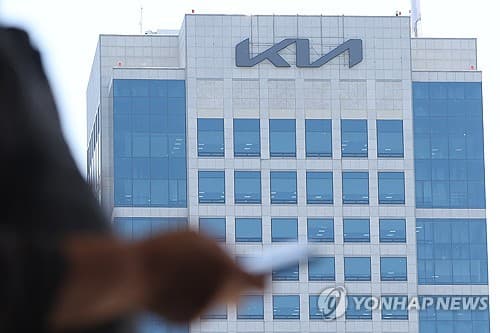
Sales increased by 5.3% to 29.5019 trillion won... Record high for a quarter with focus on high-profit vehicles
The only major finished car manufacturer with increased sales... Eco-friendly car sales share 29.7%
Kia's operating profit in the first quarter of this year decreased by more than 20% compared to the same period last year, affected by US tariffs and the Middle East war.
Instead, Kia increased sales and market share at a time when most major automakers saw their sales decline due to slowing global demand.
Kia announced in its Q1 earnings conference call held on the 24th that its consolidated operating profit for the first quarter of this year was provisionally tallied at 2.2051 trillion won, a 26.7% decrease from the same period last year.
Revenue increased by 5.3% to 29.5019 trillion won compared to the same period last year. This is the highest quarterly revenue ever.
Net profit decreased by 23.5% to 1.8302 trillion won. The operating profit margin was 7.5%.
Kia explained that its profitability was hit by the full reflection of the impact of US tariffs on imported finished cars in the first quarter of this year. The US tariff cost calculated by Kia was 755 billion won.
In addition, increased incentives due to intensifying competition in the North American and European markets, and increased provisions for sales warranties due to a sharp rise in the year-end exchange rate also negatively affected operating profit. Accordingly, the sales and administrative expense ratio rose by 1.2 percentage points (p) compared to the same period last year, reaching 12.2%.
However, Kia added that revenue recorded a quarterly high due to improved mix centered on high-profit vehicle models and favorable exchange rates.
Global sales volume (wholesale basis) increased by 0.9% compared to the same period last year, totaling 779,741 units. This includes 141,513 units domestically and 638,228 units overseas.
Considering that most major global automakers, including Hyundai Motor, saw their sales decrease, the general assessment in the automotive industry is that Kia performed well.
In the domestic market (retail basis), sales increased by 5.2%, driven by electric vehicles such as EV3, EV5, and PV5, following the execution of new year's electric vehicle subsidies.
Overseas market sales increased by 3.7%, recovering from supply disruptions due to the Strait of Hormuz blockade by shifting sales to other regions and supplying new North American hybrid models such as the Telluride.
As a result, the global market share increased by 0.5 percentage points (p) compared to the same period last year, reaching 4.1%. This is the first quarter that Kia's global market share has exceeded 4%.
In the first quarter of this year, Kia's sales of eco-friendly vehicles totaled 232,000 units, a 33.1% increase from the same period last year.
By type, hybrid vehicles increased by 32.1% to 138,000 units, and electric vehicles increased by 54.1% to 86,000 units.
Accordingly, the proportion of eco-friendly vehicles in total sales increased by 6.6 percentage points to 29.7% from 23.1% in the same period last year.
The proportion of eco-friendly vehicles in major markets was ▲ 59.3% in Korea (↑16.6%p) ▲ 23.0% in the US (↑4.6%p) ▲ 52.4% in Western Europe (↑8.5%p).
Kia expects the uncertain business environment, including geopolitical risks, intensified competition, and changes in external conditions, to continue this year.
To address this, the company plans to focus on fundamental profitability defense through product mix and ASP improvement.
In the Korean market, it will strengthen its eco-friendly vehicle-centric sales strategy, including expanding EV4, EV5, PV5, and launching the Seltos Hybrid.
In the US market, it plans to increase sales of high-profit models such as Telluride and Carnival and strengthen its hybrid lineup to enhance market dominance.
In the European market, it plans to solidify its electric vehicle leadership by establishing a full EV lineup, including EV2, EV3, EV4, and EV5.
A Kia official said, "Although short-term cost increase factors such as US tariffs occurred, global market share expansion and qualitative growth centered on eco-friendly vehicles are continuing." He added, "We will maintain profitability through sales mix improvement focused on high-value-added vehicles and cost reduction efforts."
Newsletter
Get key news delivered to your email every morning
to leave a comment.