
to leave a comment.
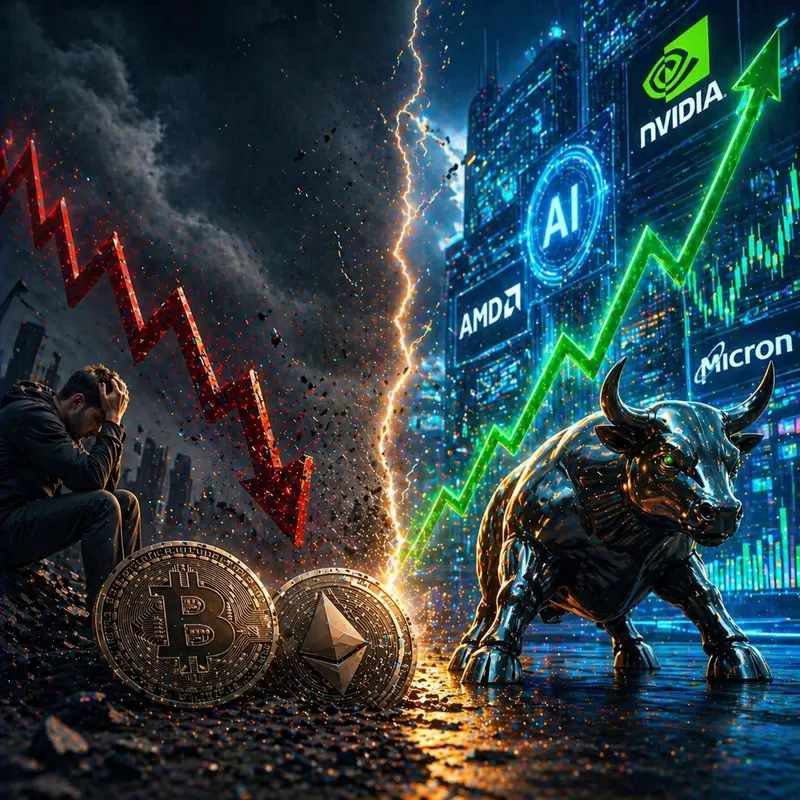
▲ Bitcoin (BTC), Ethereum (ETH), Cryptocurrency decline, Artificial Intelligence (AI) stocks/AI generated image
An analysis has emerged that the virtual asset market has significantly lagged behind traditional assets like stocks, imposing substantial opportunity costs on investors. Virtual assets have shown no clear recovery since their peak in 2021. In contrast, artificial intelligence-related stocks have recorded explosive growth, accelerating the flow of funds.
Cryptocurrency analyst Lark Davis stated in a YouTube video on April 28 (local time) that Bitcoin (BTC) and Ethereum (ETH) have significantly underperformed stock market returns in recent years. He pointed out that while Ethereum has remained stagnant around the $2,300 level for an extended period, AI-related stocks like NVIDIA have surged more than 14-fold, concluding that virtual asset investment has effectively entered a long-term stagnation phase.
Bitcoin is currently under pressure at the upper resistance line of its ascending channel. If it fails to break through the recent average investor purchase price of $79,000, there is a possibility it could be pushed back into a descending channel. Davis emphasized that whether it settles above the 200-day exponential moving average of $82,000 is key to a trend reversal. While Arthur Hayes has set a year-end target price of $125,000, the current market is lacking momentum due to low trading volume and weakening buying interest.
Policy uncertainty is also acting as a burden. The US cryptocurrency market structure bill is being delayed due to political conflicts. Ethical controversies surrounding the virtual asset business of former President Donald Trump's family have arisen, placing the bill at the center of political contention.
The macro environment is also unfolding unfavorably for virtual assets. Tensions in the Middle East have led to continued control of the Strait of Hormuz, causing Brent crude oil prices to rise, which contributes to global inflationary pressures. Unlike the stock market, which continues its upward trend despite these variables, the virtual asset market shows weakened rebound momentum due to limited capital inflow.
Davis analyzed that investment funds are moving to industries that generate real profits. He revealed that despite holding Bitcoin as a major asset, there was a significant gap in returns compared to tech stocks like AMD and Micron Technology. For virtual assets to regain their investment appeal, they still face the challenge of demonstrating practical utility and performance that exceeds expectations.
*Disclaimer: This article is for investment reference only, and we are not responsible for any investment losses based on it. The content should be interpreted for informational purposes only.*
Newsletter
Get key news delivered to your email every morning
to leave a comment.