
to leave a comment.
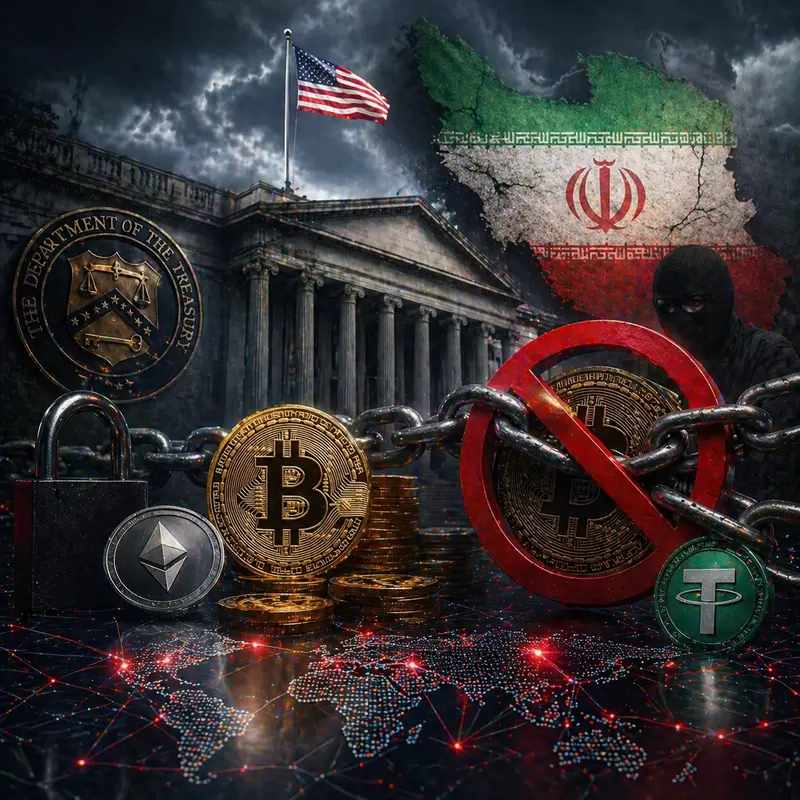
▲ US, Iran, Bitcoin (BTC), Virtual Assets/AI Generated Image
The U.S. Treasury Department has escalated economic pressure on Iran to its highest level by implementing its largest-ever virtual asset freeze to cut off Tehran's funding.
According to Crypto News reports, U.S. Treasury Secretary Scott Bessent announced large-scale sanctions on April 30 (local time) targeting Bitcoin (BTC) and virtual asset wallet networks linked to Iran. Secretary Bessent emphasized that through "Operation Economic Fury," the U.S. will relentlessly track funds Iran attempts to funnel overseas, thereby severing all financial lifelines of the regime. This measure comes amidst the Trump administration's intensified economic pressure during nuclear negotiations with Iran, signaling that the Treasury Department will no longer leave virtual assets as a blind spot for sanctions.
The Treasury Department's Office of Foreign Assets Control (OFAC) added numerous Iran-linked wallets to its sanctions list, freezing virtual assets worth approximately $344 million in the process. Stablecoin issuer Tether immediately froze USDT held in two wallet addresses on the Tron (TRX) network at the request of U.S. authorities. These wallets were identified as being closely associated with the Central Bank of Iran and the Islamic Revolutionary Guard Corps, marking the largest single freeze targeting Iran's war economy to date.
Iran's virtual asset ecosystem has grown rapidly, exceeding $7.78 billion last year, with the Islamic Revolutionary Guard Corps accounting for more than half of all on-chain activity. It has been revealed that Iran strategically utilized USDT and state-led Bitcoin mining to circumvent the Society for Worldwide Interbank Financial Telecommunication (SWIFT) network and secure dollar liquidity. In an interview with Fox Business, Secretary Bessent stated that the actual value of seized Iranian virtual assets is close to $500 million, explaining that comprehensive tracking of Iranian officials' overseas real estate and pension funds is also underway.
Operation Economic Fury, initiated by U.S. President Donald Trump, extends beyond asset seizures and bank account freezes to include secondary sanctions on countries purchasing Iranian crude oil. The severe impact of these sanctions led to the bankruptcy of one of Iran's major banks in December last year, and the Iranian rial faced a serious currency crisis, with its value plummeting by 60% to 70% against the U.S. dollar. Despite energy market instability due to the potential closure of the Strait of Hormuz, the Trump administration maintains its policy of an uncompromising blockade on Iranian crude oil, tightening the noose around Tehran.
U.S. authorities are working closely with virtual asset exchanges and financial institutions to monitor Iran's money laundering routes in real-time. Blockchain analytics firms such as Chainalysis are meticulously tracking how the Iranian regime converted proceeds from illegal oil sales into stablecoins, then concealed the funds through intermediary wallets and decentralized finance bridges. This large-scale asset freeze clearly demonstrates that even digital assets on public blockchains cannot escape the scrutiny of regulatory authorities when issuers and law enforcement agencies collaborate.
*Disclaimer: This article is for investment reference only, and we are not responsible for any investment losses based on it. The content should be interpreted for informational purposes only.*
Newsletter
Get key news delivered to your email every morning
to leave a comment.