
to leave a comment.
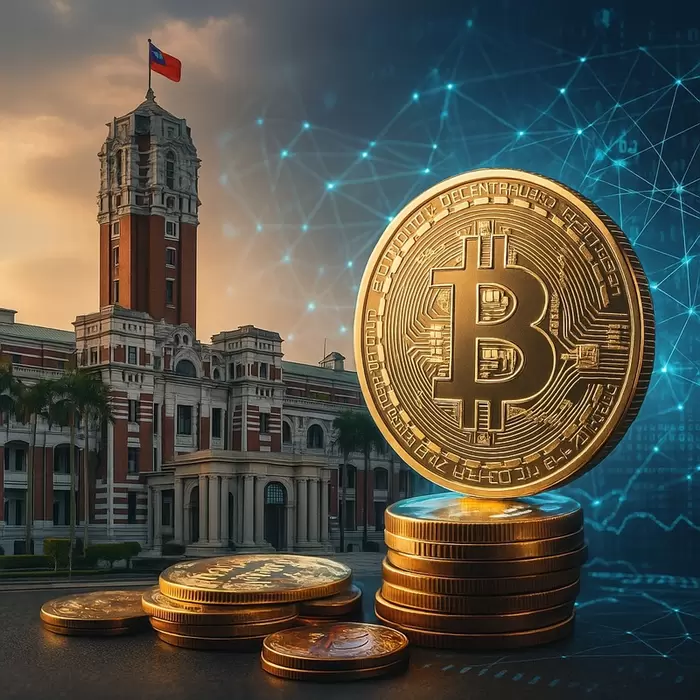
▲ Taiwan, Bitcoin (BTC)/ChatGPT Generated Image ©
An extraordinary proposal has emerged from the highest echelons of Taiwan's political circles, suggesting that the national treasury should open its doors to digital gold in preparation for geopolitical crises, thereby drawing the attention of the global financial community.
According to the cryptocurrency specialized media Bitcoinist on May 2 (local time), Ko Ju-Chun, a member of Taiwan's Legislative Yuan, officially submitted a proposal urging the allocation of a portion of the National Reserves to Bitcoin (BTC). This proposal is not mere media play; it was directly delivered to Premier Cho Jung-tai and Central Bank Governor Yang Chin-long, and the central bank is required to submit an in-depth report on digital asset reserves within one month (1 Month).
The core background of this proposal lies in Taiwan's distorted foreign exchange reserve structure. Currently, Taiwan holds enormous foreign exchange reserves amounting to approximately 600 billion dollars (600 Billion Dollars), but over 80% (80 Percent) of this is concentrated in US dollar (USD) assets. The Bitcoin Policy Institute (BPI), which supported the proposal, emphasized that Bitcoin should be introduced as a structural hedge to reduce dependence on a specific national currency in situations of escalating geopolitical risks.
What is particularly noteworthy is the approach to Bitcoin not merely as a speculative asset but as a strategic instrument (Strategic Instrument) for national security. Unlike gold, which requires physical transportation, or fiat currencies dependent on a specific nation's system, Bitcoin is regarded as a powerful tool that can independently preserve and utilize asset value even in extreme emergencies where existing financial networks are completely cut off.
However, the official stance of Taiwan's Central Bank (Central Bank) remains cautious. The central bank had previously rejected the inclusion of Bitcoin in its reserves in 2025, citing extreme price volatility and practical difficulties in custody. However, it has recently moved beyond unconditional rejection to verify its effectiveness, quietly operating a sandbox (Sandbox) program that experiments with asset movements within a controlled system using seized Bitcoins in the region.
The Taiwanese government and its central bank must now officially evaluate and conclude on this weighty proposal that will determine the future of the nation's asset portfolio. Nations worldwide, deeply contemplating the adoption of digital currency as a strategic security asset, are holding their breath and watching the next move of Taiwan's financial authorities.
*Disclaimer: This article is for investment reference only, and we are not responsible for any investment losses based on it. The content should be interpreted for informational purposes only.*
Newsletter
Get key news delivered to your email every morning
to leave a comment.