
to leave a comment.
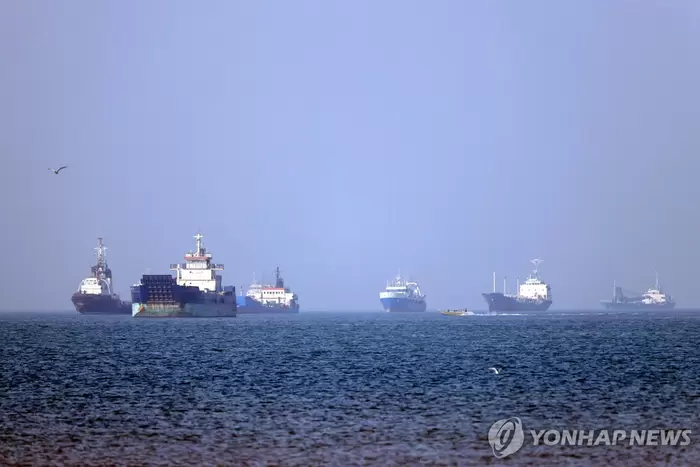
Strait of Hormuz
As soon as the United States launched 'Project Freedom' to induce the escape of ships trapped in the Strait of Hormuz, clashes erupted, and the truce faced a collapse crisis.
With peace talks stalled and an unstable truce continuing, a new confrontation between the warring parties and even armed clashes led to a rapid deterioration of tensions in the Middle East, which controls the global energy market.
◇ US and Iran militarily attack each other on the first day of 'Project Freedom'
According to foreign media, the U.S. military announced that it used force on the 4th (local time), the first day of the implementation of Project Freedom, to ensure the safe passage of merchant ships in the Strait of Hormuz.
It is explained that actual clashes occurred as the U.S. guided merchant ships through the Strait of Hormuz and Iran attempted to block them.
The U.S. Central Command, which oversees the war with Iran, announced that it sank Iranian speedboats threatening merchant ships using Apache helicopters.
Central Command stated that U.S. warships intercepted cruise missiles and suicide drones launched by Iran at ships in the Strait of Hormuz.
The U.S. announced that it would launch Project Freedom to assist ships trapped in the Strait of Hormuz starting that morning and immediately put it into action.
Iran, claiming control over the Strait of Hormuz, warned that it would not rule out military action against the U.S. plan and actually used force.
Earlier, Iran's Islamic Revolutionary Guard Corps (IRGC) released a new map showing an expanded control zone, asserting tighter control over the Strait of Hormuz by blocking the entire shipping lane.
This means that if foreign forces, especially the U.S. military, enter or attempt to approach this area, Iran will use military force to deter them.
However, the U.S. defines the project to free ships trapped in the Strait of Hormuz as a humanitarian measure and intends to continue the operation.
Due to this confrontation and conflict between the U.S. and Iran, expectations for an end to the war are weakening, and observations are emerging that the conflict is entering a dangerous new phase where the war could escalate.
Fujairah Port, UAE
◇ Neighboring Gulf nations attacked again…Mysterious explosion on an innocent Korean ship
Iran's attacks on the Gulf region, which had stopped for about a month since the truce between the two sides came into effect on the 8th of last month, have resumed.
The UAE Ministry of Defense announced on the 4th that it intercepted a total of 19 missiles and drones believed to have been launched from Iran.
This attack also caused a fire at the Fujairah petrochemical complex, a major energy facility in the UAE.
The map of the Strait of Hormuz ship control lines released by the Revolutionary Guard on this day shows that the "control range" of the strait has been extended further south than before, to the vicinity of Fujairah.
Fujairah has an oil export terminal that can bypass the Strait of Hormuz, and concerns spread that the entire oil supply chain could be paralyzed due to Iran's expanding influence.
An explosion of unknown cause also occurred on a ship operated by a Korean shipping company in the Strait of Hormuz.
According to the Korean Ministry of Foreign Affairs, at around 8:40 PM KST on the 4th, an explosion and fire occurred on a ship (HMM NAMU, Panama flag) operated by a Korean shipping company that was anchored in the waters near the UAE inside the Strait of Hormuz. No casualties have been reported so far.
President Trump claimed that "Iran fired several times at unrelated countries, including Korean cargo ships, regarding ship movement issues related to 'Project Freedom' operations." He then demanded South Korea's participation in the U.S. operations in the Strait of Hormuz.
The Korean government has started verifying the facts amid the possibility that the ship was hit during the U.S. military intervention and Iran's response in the Strait of Hormuz.
◇ Peace talks spinning wheels…Little chance of progress due to no common ground on nuclear issues, Hormuz, etc.
The United States and Iran are repeatedly presenting revised peace proposals behind the scenes and continuing their efforts for peace talks, but it is clear that they are going nowhere.
After the U.S. first presented a 9-point peace proposal, Iran delivered a 14-point revised proposal to the U.S.
President Trump stated in an interview with Israeli public broadcaster Kan the previous day, "I've reviewed it, but I can't accept it."
Esmail Baghaei, spokesperson for the Iranian Ministry of Foreign Affairs, also said at a press conference on the same day, "We have received the U.S. response and are still reviewing it," adding, "The U.S. demands are excessive and unreasonable."
Looking at the demands reported by foreign media, it is observed that the U.S. and Iran have not narrowed their differences on the nuclear program and control over the Strait of Hormuz.
The Trump administration wants Iran to abandon its nuclear program, which is directly linked to the justification for a quick declaration of victory, but it is reported that Iran is ignoring this.
Iran maintains the position of concluding negotiations on Hormuz control first, then proceeding with nuclear negotiations as the next step, and is even demanding war reparations from the U.S. as a condition for agreement.
◇ Oil prices surge, stock prices hit by frostbite amid fears of escalation due to Hormuz standoff
As peace talks remained deadlocked and the truce between the U.S. and Iran became precarious, international oil prices surged due to concerns about supply reductions.
On this day, the closing price of Brent crude oil futures for July delivery on the ICE Futures Exchange rose by 5.80% from the previous trading day to $114.44 per barrel.
The closing price of U.S. West Texas Intermediate (WTI) crude oil futures for June delivery on the New York Mercantile Exchange also rose by 4.39% from the previous trading day to $106.42 per barrel.
If the war escalates, a scenario unfolds where the global economy faces a chain of shocks, starting from the energy market.
Reflecting this anxiety, the U.S. stock market, which had been on a continuous upward trend, closed lower across the board on this day, with the Dow Jones Industrial Average (-1.13%), the S&P 500 index (-0.41%), and the Nasdaq Composite index (-0.19%).
Newsletter
Get key news delivered to your email every morning
to leave a comment.