
to leave a comment.
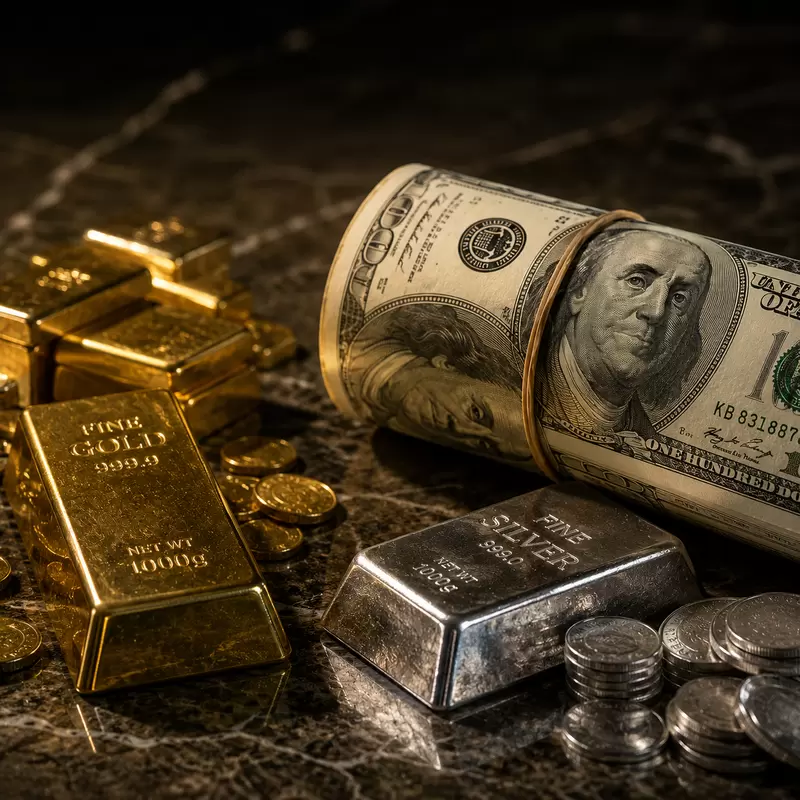
▲ Gold, Silver, Dollar (USD)/AI generated image
The price of gold plummeted 33% from its all-time high in January, falling below the $4,000 mark. The strong dollar and the Federal Reserve's hawkish shift have emerged as key factors stifling the safe-haven rally.
According to financial media outlet FXLeaders on July 2 (local time), spot gold underwent a 33% correction after hitting an all-time high of $5,589 per ounce in January 2026. The gold price fell below the psychological support level of $4,000 at the end of June, then found short-term support in the $3,900 range, before slightly rebounding to around $4,050 per ounce.
The core background of this decline is changes in the macro environment. The re-acceleration of inflation, partly reflecting the aftermath of the earlier Iran conflict, led to a hawkish shift by the Federal Reserve (Fed), and the market is now pricing in the possibility of up to three interest rate hikes this year. As gold is a non-interest-bearing asset, the burden of holding it increases compared to high-yield bonds during a prolonged period of high interest rates.
The strong dollar also directly pressured gold prices. As funds flowed into the United States, the US Dollar Index (DXY) climbed near a 13-month high. Since gold is an asset priced in dollars, an increase in the dollar's value makes it more expensive for investors in other currency zones to buy, thus strengthening downward price pressure.
Temporary diplomatic progress between the US and Iran also cooled demand for safe-haven assets. As geopolitical tensions eased somewhat, investors largely realized profits accumulated since the January peak. The media reported that this trend acted as a factor contributing to the short-term sharp decline in gold prices.
However, major Wall Street institutions view this correction as a cyclical adjustment rather than the end of a bull market. Central banks continue to purchase gold as part of their de-dollarization strategies and as a hedge against global government debt, while long-term investors are also maintaining their gold allocations amid concerns about weakening fiat currency purchasing power and fiscal deficits. Although short-term price targets have been lowered to reflect delayed interest rate cuts, major institutions' year-end price targets are set in the range of $4,900 to $6,300 per ounce.
[Article Key Summary]
-Spot gold plummeted 33% from its peak of $5,589 per ounce in January 2026, falling below the $4,000 mark.
-The Federal Reserve's hawkish shift, the possibility of up to three interest rate hikes this year, and the US Dollar Index approaching a 13-month high pressured gold prices.
-Major Wall Street institutions view this correction as a cyclical adjustment rather than the end of a bull market, citing central bank purchases and de-dollarization demand.
*Disclaimer: This article is for investment reference only, and we are not responsible for any investment losses based on it. The content should be interpreted for informational purposes only.*
Newsletter
Get key news delivered to your email every morning
to leave a comment.