
to leave a comment.
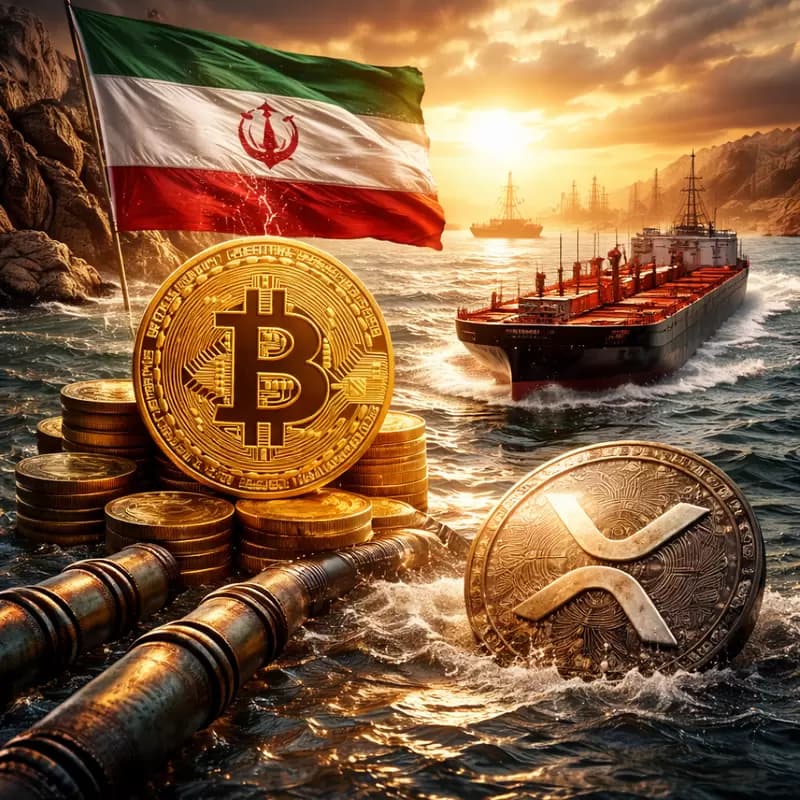
▲ Iran, Strait of Hormuz, Bitcoin (BTC), XRP/AI-generated image
An analysis has emerged suggesting that the value of existence for XRP could vanish as Iran collects tolls in Bitcoin for the Strait of Hormuz, thereby dominating the standard for real-world trade settlements.
According to BeInCrypto, a cryptocurrency-focused media outlet, on April 9 (local time), the Iranian government officially introduced cryptocurrency as a national payment rail by imposing a Bitcoin (BTC) toll of $1 per barrel on vessels passing through the Strait of Hormuz. BeInCrypto analyzed that as Bitcoin emerges as a practical trade settlement method to circumvent Western sanctions, existing payment-only coins are losing their footing. In particular, as large-scale physical trade settlements began to occur via Bitcoin, Ripple's long-established position as a bridge currency has faced a fundamental challenge.
Market analysts interpret the phenomenon of Bitcoin being used as a real payment method in the artery of the global energy supply chain as a "game over" signal for XRP. While XRP has boasted fast and cheap inter-institutional remittances as its strength, Bitcoin has proven its value by being chosen as a direct payment method between nations in geopolitical crisis situations. Analysts warn that as Bitcoin demonstrates its effectiveness as a payment infrastructure, the market competitiveness of XRP's technological advantages may weaken.
XRP's price has shown a sluggish trend recently, contrasting with Bitcoin's upward momentum, reflecting investor anxiety. Even after the SEC and CFTC clarified XRP's legal status by classifying it as a digital commodity in March, its price has remained stagnant around $1.40. Among investors, pessimism is spreading that if Bitcoin becomes the standard for real-world trade settlements, XRP's demand will sharply decline.
As the global financial order is reorganized into a cryptocurrency-based multipolar system, Bitcoin has established itself as a core payment infrastructure beyond a store of value. The Iranian government's move, by mandating Bitcoin payments for all oil tankers passing through the Strait of Hormuz, is an example of cryptocurrency being elevated to a de facto international currency. This demonstrates that while XRP remained in the interbank settlement market, Bitcoin has captured the massive market of real-world transactions between nations.
Bitcoin's entry into the payment network is a significant turning point reshaping the power structure of the virtual asset market. Investors are closely monitoring the possibility of the Bitcoin payment system in the Strait of Hormuz becoming a new standard for international trade. Hamid Hosseini, spokesperson for the Iranian Oil, Gas, and Petrochemical Products Exporters' Union, emphasized that Bitcoin is the most reliable means to avoid fund tracking and seizure, thereby justifying the introduction of this system.
*Disclaimer: This article is for investment reference only, and we are not responsible for any investment losses based on it. The content should be interpreted for informational purposes only.*
Newsletter
Get key news delivered to your email every morning
to leave a comment.