
to leave a comment.
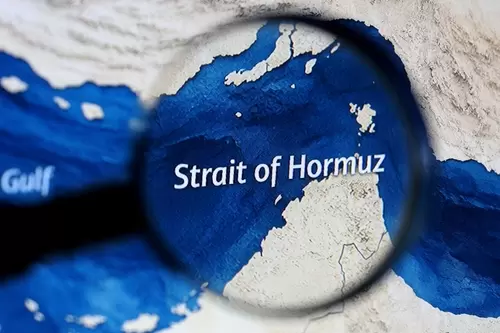
Ken Griffin, CEO of Citadel, a giant in the US hedge fund industry, said, "If we assume the Strait of Hormuz is closed for the next 6 to 12 months, the world will eventually fall into a recession. There is no way to avoid this."
CNBC, a US economic broadcast, reported that CEO Griffin made these remarks at the 'Semafor World Economy' conference held in Washington D.C. on the 14th (local time).
As a result, the world would see a massive transition to alternative energy sources such as wind, solar, and nuclear power, CEO Griffin added.
He also expressed the view that the situation would have been worse if the US had delayed its attack until Iran's military power had grown larger.
Ken Griffin, CEO of Citadel
International oil prices plummeted today on news that the US and Iran would resume talks to end the war. Brent crude futures for June delivery closed at $94.79 per barrel, down 4.6% from the previous session. West Texas Intermediate (WTI) crude futures for May delivery closed at $91.28, down 7.9% from the previous session. However, prices remain significantly higher than the pre-war level of approximately $70.
In response to Iran's de facto blockade of the Strait of Hormuz, the US has been conducting a so-called 'counter-blockade' since 10 AM Eastern Time on the 13th, targeting ships departing from or bound for Iranian ports. The passage through Hormuz for ships not traveling to or from Iran is permitted.
The Wall Street Journal (WSJ) reported today, citing two US officials, that more than 20 merchant ships passed through the Strait of Hormuz in the past 24 hours.
The WSJ assessed that this number, while still limited compared to the pre-war average of about 130 ships, indicates a significant improvement in the flow of vessels through the Strait of Hormuz, a critical passage for global oil transport.
Meanwhile, French President Emmanuel Macron and British Prime Minister Keir Starmer will co-host an international video conference on the 17th to ensure safe passage through the Strait of Hormuz.
The WSJ reported that European countries are pushing for a multinational cooperation plan, including military assets such as mine countermeasures vessels, to resume shipping operations in the Strait of Hormuz.
This initiative is expected to be implemented after the war between the US/Israel and Iran ends, and it is highly likely that the US will be excluded, it said.
According to the WSJ, the goal of this initiative is to support the movement of ships currently stranded in the strait, clear large-scale mines, and provide regular military escorts and surveillance.
Newsletter
Get key news delivered to your email every morning
to leave a comment.