
to leave a comment.
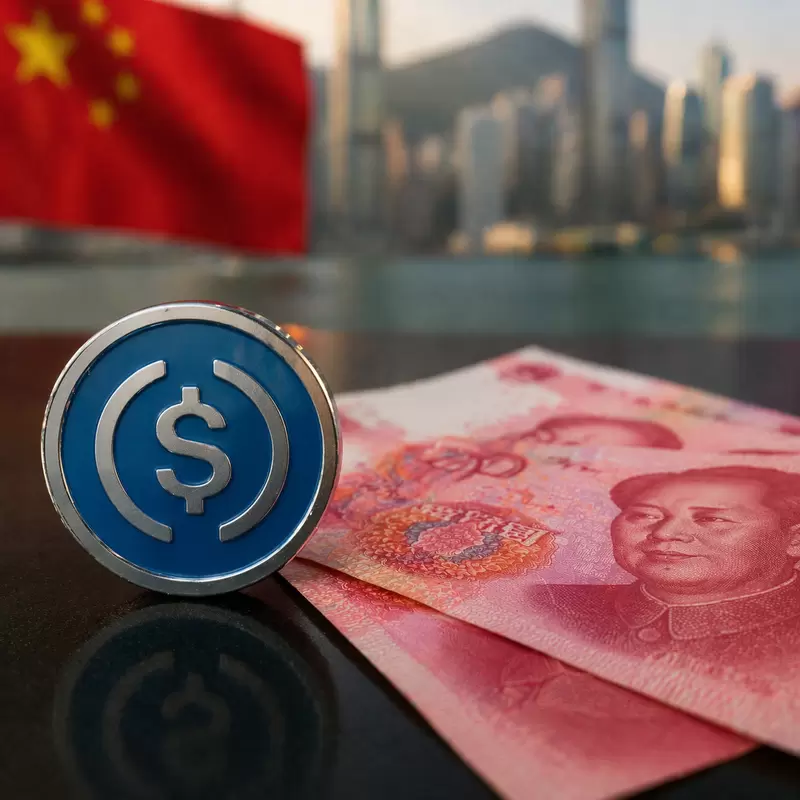
▲ Stablecoin, Chinese Yuan/AI Generated Image
Jeremy Allaire, CEO of Circle, highlighted the potential of Yuan stablecoins, emphasizing new opportunities arising from institutional changes in the Chinese market.
According to cryptocurrency media outlet Cointelegraph on April 16 (local time), CEO Allaire projected at a recent financial conference in Hong Kong that Yuan-based stablecoins will play a pivotal role in future cross-border payments and trade finance. Allaire noted Hong Kong's rapid emergence as Asia's virtual asset hub by establishing a stablecoin regulatory framework, anticipating this to be a catalyst for the activation of Yuan stablecoins.
Circle currently secures market trust through its dollar-based stablecoin, USDC, and is not hiding its ambition to expand this into other fiat currency domains, including the Yuan. Allaire stated, "Although the Chinese government maintains a conservative stance on virtual assets, technological experiments through Hong Kong present an opportunity to accelerate the internationalization of the Yuan." He added that stablecoins combined with smart contract technology are expected to enable international remittances much faster and at a lower cost than traditional banking systems.
Market experts view Circle's move as a strategy to find a new breakthrough amidst strong regulatory pressure in the United States. This is because while stablecoin regulations are delayed in the U.S., Europe and Hong Kong are providing clear guidelines and taking the lead. CEO Allaire added, "Payment innovation knows no borders, and Yuan stablecoins could be a viable alternative to complement the dollar's exclusive status in global trade."
However, capital outflow controls and regulatory uncertainties from Chinese authorities remain significant obstacles. This is due to concerns that if the Yuan's value is freely traded in stablecoin form, China's monetary policy control could be weakened. Nevertheless, Allaire argued that these risks can be sufficiently managed through Hong Kong's regulatory sandbox, reiterating the need to develop customized Yuan products for institutional investors.
In conclusion, Circle defines Yuan stablecoins not merely as digital currency but as core infrastructure for the next-generation financial system. Allaire stated, "We are at the beginning of the massive trend of fiat currency digitization," clearly expressing his intention to expand influence in the Asian market. If Yuan stablecoins begin their full-fledged journey based on Hong Kong's regulatory framework, the landscape of the global stablecoin market is expected to shift significantly once again.
*Disclaimer: This article is for investment reference only, and we are not responsible for any investment losses based on it. The content should be interpreted for informational purposes only.*
Newsletter
Get key news delivered to your email every morning
to leave a comment.