
to leave a comment.
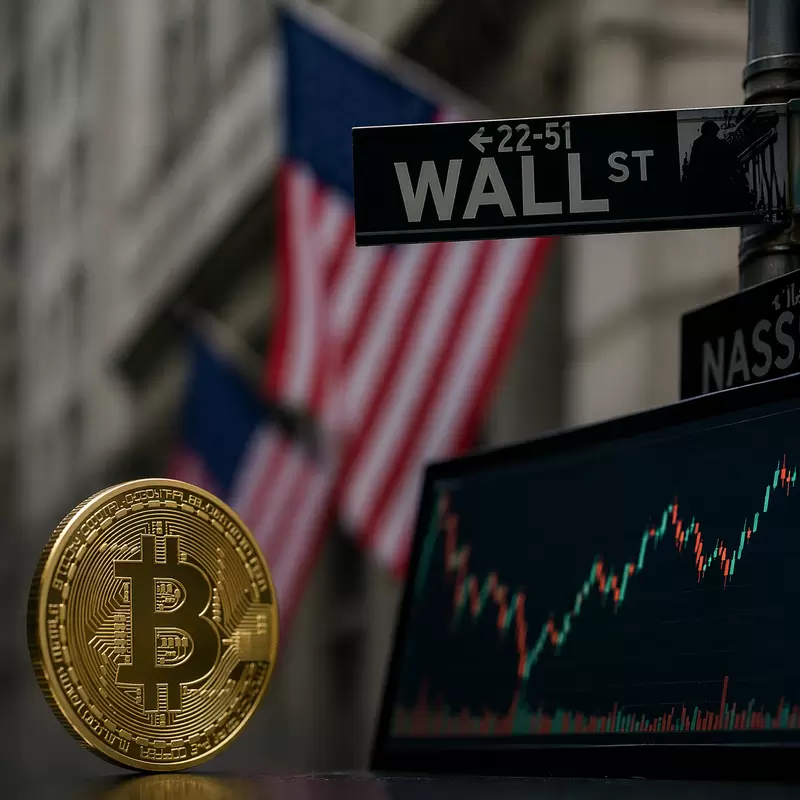
▲ Bitcoin (BTC), Wall Street/AI-generated image
Wall Street financial powers have abandoned their past denial of Bitcoin and are now moving to dominate the market by offering the lowest fees.
The cryptocurrency YouTube channel Coin Bureau highlighted Morgan Stanley's moves in a video released on April 16 (local time). Research analyst James Faucette previously warned that Bitcoin (BTC) could become worthless. CEO James Gorman also disparaged it as a speculative asset. However, now Ellison Wallace, Global Head of ETFs, has entered the market by setting the lowest fee of 0.14%. This is a strategy to seize fee revenues from Blackrock and Fidelity. Wallace officially acknowledged that Bitcoin is an asset that will not disappear.
Morgan Stanley has 16,000 financial advisors. The assets they manage amount to $6.2 trillion. These advisors recommend clients invest in MSBT, their proprietary product. They have built a vertically integrated structure, monopolizing every process from advice to custody. Senior ETF analyst Eric Balchunas evaluated MSBT's debut performance as being in the top 1%. Morgan Stanley's actions are the result of meticulous calculations based on the logic of capital.
The influx of institutional capital poses a structural risk to decentralization. U.S. Bitcoin spot ETFs account for 5.7% of the total supply. Coinbase custodies over 80% of U.S. ETF assets. The concentration of assets in a specific company increases risk. Coinbase, led by CEO Brian Armstrong, holds approximately 1.5 million BTC. A security incident or regulatory risk could shake the entire market.
ETF investors do not actually own Bitcoin. They cannot directly manage their private keys, nor can they transfer assets. This contradicts the essence of P2P currency emphasized by Satoshi Nakamoto. Users become trapped within the fence designed by banks. In exchange for convenience, they give up financial sovereignty and return under the control of banks. Bitcoin spot ETF assets only move within the closed structure of large financial institutions.
Wall Street chose to absorb and control Bitcoin instead of destroying it. The individual's lead in the financial revolution is gradually being diluted. The protagonists who caused the 2008 financial crisis have once again become the masters of Bitcoin. A paradoxical situation is unfolding where the foundation of the market is being shaken. The supply monopoly by large banks is undermining Bitcoin's revolutionary value.
*Disclaimer: This article is for investment reference only, and we are not responsible for any investment losses based on it. The content should be interpreted for informational purposes only.*
Newsletter
Get key news delivered to your email every morning
to leave a comment.