
to leave a comment.
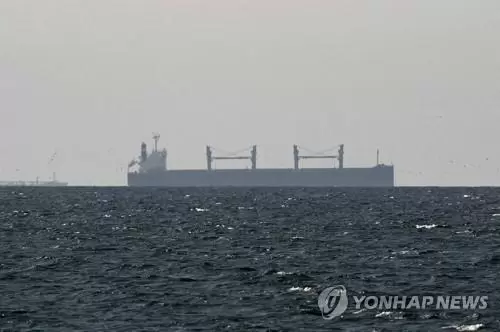
A cargo ship near the Strait of Hormuz
International oil prices plummeted on the 17th (local time) after Iran announced it would fully permit commercial vessel passage through the Strait of Hormuz during the ceasefire period.
On this day, the closing price of Brent crude futures for June delivery on the ICE Futures Exchange fell by 9.1% from the previous session to $90.38 per barrel.
On the New York Mercantile Exchange, the closing price of West Texas Intermediate (WTI) crude futures for May delivery fell by 11.5% from the previous session to $83.85 per barrel.
Brent futures temporarily lowered their intraday low to $86.09 per barrel. WTI futures lowered their intraday low to $80.56.
This is the lowest level since March 10.
Expectations that energy supply disruptions would normalize sharply drove down oil prices after Iran announced it would fully permit commercial vessel passage through the Strait of Hormuz, considering the 10-day ceasefire between Israel and Lebanon.
Iranian Foreign Minister Abbas Araghchi declared on his X (formerly Twitter) account today, "Reflecting the ceasefire situation in Lebanon, all commercial vessels are fully permitted to navigate through the Strait of Hormuz for the remainder of the ceasefire period."
The ten-day ceasefire between Israel and Lebanon officially took effect at 5 PM ET on the 16th (6 AM KST on the 17th).
U.S. President Donald Trump stated on social media Truth Social that "Iran has agreed never to close the Strait of Hormuz again."
President Trump also mentioned that the U.S. and Iran are expected to resume peace talks this weekend, and a deal could be reached within one to two days.
Iran's blockade of the Strait of Hormuz, which occurred after the outbreak of the U.S.-Iran war, has been a major factor behind the surge in global energy prices. The Strait of Hormuz is a critical transport route through which approximately 20% of the world's crude oil and liquefied natural gas (LNG) maritime traffic passes.
Energy market advisory firm Gelber & Associates analyzed in a report today, "The market is rapidly unwinding extreme risk premiums," adding, "Oil prices are reverting to reflect actual normalization of transportation rather than the risk of supply disruptions."
Newsletter
Get key news delivered to your email every morning
to leave a comment.