
to leave a comment.
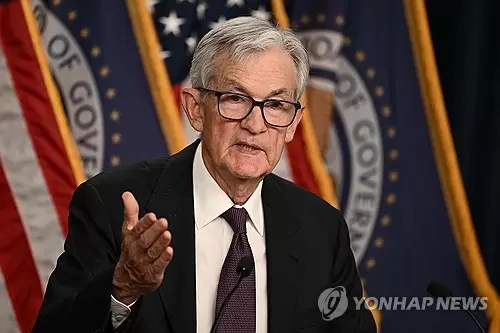
Jerome Powell, Chairman of the U.S. Federal Reserve
As concerns about rising inflation due to the energy shock from the Middle East materialize, market expectations are growing that the U.S. benchmark interest rate cut will be delayed.
According to a report from the Bank of Korea's New York office on the 21st, most major investment banks (IBs) expect the U.S. Federal Reserve (Fed) to resume interest rate cuts in September this year.
Among 10 IBs, only Morgan Stanley predicted that the Fed would complete two interest rate cuts before September.
Most IBs maintained the expected number of future rate cuts as per the previous month but predicted that the timing for resuming and concluding rate cuts would be delayed.
BOA had previously expected the Fed to cut rates twice by July this year, but in this survey, they pushed back the conclusion of rate cuts to October this year.
Citi, Nomura, and Wells Fargo also postponed the timing of the rate cut conclusion from September to December.
The expected number of rate cuts remained at 3 for Citi and 2 for BOA, Nomura, and Wells Fargo.
Some also reduced the expected number of cuts compared to the previous month.
TD reduced its forecast for the number of future Fed rate cuts from 3 to 2. It expected the rate cut conclusion to be in December this year, with a final rate of 3.00% (upper bound).
JP Morgan, like last month, predicted zero benchmark interest rate cuts this year. This means they believe the Fed's rate cuts already ended in December last year.
Barclays, Goldman Sachs, and Morgan Stanley maintained their forecast of 2 rate cuts within the year, while Deutsche Bank maintained 1.
The forecast for the Fed's policy rate in September this year, as reflected in the futures market, also continued to rise from 3.25% in February to 3.50% in March and 3.62% in April.
The Bank of Korea stated, "IBs predicted that the Fed would maintain a cautious wait-and-see stance for the time being, as the aftermath of the energy supply shock could be reflected in future inflation indicators with a time lag."
Overseas IB's Annual Interest Rate Forecast
With Chairman Jerome Powell's term ending on May 15th, just a month away, inflation concerns due to energy supply disruptions from the Middle East have materialized.
Last month, the U.S. Consumer Price Index (CPI) rose by 3.3% year-on-year, marking the largest increase since May 2024. In particular, due to energy instability from the Middle East, gasoline prices surged by 18.9% year-on-year, causing the price increase rate for non-durable goods to jump to 4.9%, significantly higher than the previous month's 1.7%.
Short-term (1-year) expected inflation in March rose to 3.8%, up from 3.4% in the previous month.
The Bank of Korea analyzed, "If military conflicts in the Middle East prolong, it could stimulate expected inflation and spread price pressures to other items."
Regarding the results of last month's Federal Open Market Committee (FOMC), the market "evaluated it as hawkish, focusing on Chairman Powell's judgment that inflation deceleration is constrained by oil price shocks and other factors, and opinions on fewer-than-expected rate cuts."
Newsletter
Get key news delivered to your email every morning
to leave a comment.