
to leave a comment.
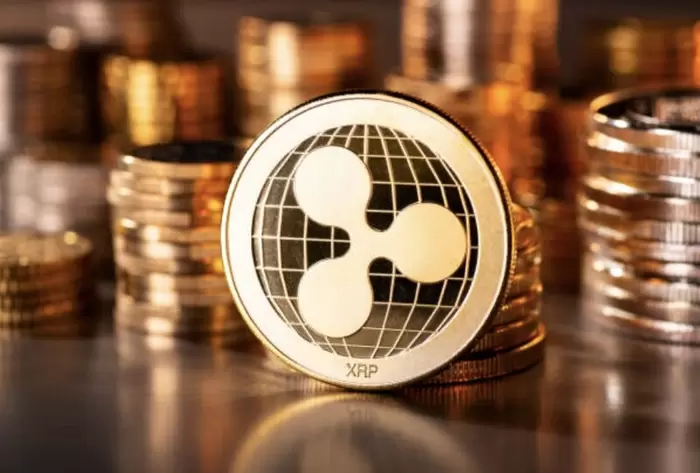
▲ Ripple (XRP) ©
In the Real World Asset (RWA) tokenization market, which connects traditional finance and blockchain, the XRP (Ripple) ecosystem has surpassed emerging powerhouse Solana, embracing assets worth $1.9 billion and triggering a massive paradigm shift in global blockchain adoption.
According to cryptocurrency media outlet Bitcoinist on April 22 (local time), the XRP Ledger, armed with efficiency and scalability, has overtaken Solana in the global RWA sector rankings, establishing itself as a leader in the tokenization ecosystem. The current volume of tokenized assets deposited on this network is approaching $1.9 billion, and this is analyzed as a tangible achievement driven by massive capital inflows from actual institutional investors, not just a speculative craze.
Hugo Philion, co-founder of Flare Networks, emphasized in a recent interview that RWAs issued on the XRP Ledger can be utilized through Flare's computing layer with both privacy and regulatory compliance. He particularly lauded the new TokenEscrow feature, which allows tokenized assets to be securely held and released, as a groundbreaking change that will reshape the ecosystem.
Although the XRP Ledger does not offer Solana-level programmability or privacy like Canton, the combination of its controlled payment system and Flare Network's private computing layer is opening up the future for regulatory-compliant, revenue-generating RWAs. Cryptocurrency analyst BankXRP also diagnosed this overtaking of Solana as a strong institutional momentum signaling new utility expansion for XRP.
As the network's global influence expands, Ripple Labs has also embarked on a long-term project to protect the ecosystem from hacking threats in the upcoming era of quantum computing. Following concerns raised by Google Quantum AI's research that current wallet encryption algorithms could be breached by advanced quantum computers, Ripple Labs has unveiled a multi-stage roadmap to achieve quantum resistance, targeting completion by 2028.
Ripple's quantum-readiness plan is being implemented in four stages: post-quantum recovery, proactive planning and experimentation, post-quantum primitive exploration, and a full transition to post-quantum signatures. Through this multi-stage strategy, the development team is securely migrating the cryptographic system without paralyzing the operational global financial infrastructure or compromising the value of digital assets guaranteed by the ledger, thereby solidifying its technological advantage.
*Disclaimer: This article is for investment reference only, and we are not responsible for any investment losses based on it. The content should be interpreted for informational purposes only.*
Newsletter
Get key news delivered to your email every morning
to leave a comment.