
to leave a comment.
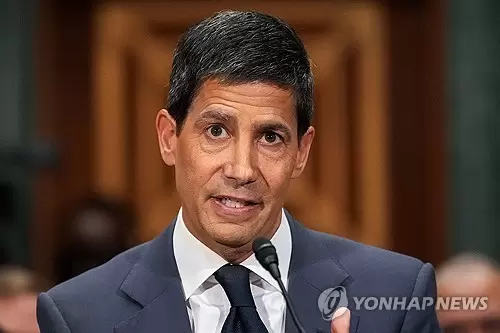
Kevin Wash, nominee for Fed Chair, attending the Senate confirmation hearing
On the 21st (local time), when the confirmation hearing for Kevin Wash, nominee for Chairman of the U.S. Federal Reserve (Fed), was held, the market's probability of expecting benchmark interest rates to be frozen until the end of this year increased.
According to the CME FedWatch Tool, as of 10:30 AM KST on the 22nd, the federal funds rate futures market reflected a 67% probability that the benchmark interest rate would be frozen at its current level (3.50-3.75%) until December. This is 13 percentage points higher than the previous day.
U.S. Treasury yields also rose.
On the 21st, the U.S. 10-year Treasury yield rose by 4.10 bp (1 bp = 0.01%p) to 4.293%. The yield on the monetary policy-sensitive 2-year Treasury rose by 5.9 bp to 3.782%.
However, Bloomberg reported that strong economic indicators and West Texas Intermediate (WTI) crude oil prices, which once again exceeded $90 per barrel, reduced expectations for interest rate cuts, and these factors had a greater impact than Wash's testimony.
At the Federal Senate Banking Committee's confirmation hearing today, nominee Wash said, "Presidents tend to favor interest rate cuts. The difference is that President Donald Trump expresses it very openly, without proxies or prevarication."
He continued, "But the Fed's independence rests with the Fed. The Fed leadership must decide for itself what is right," adding, "I do not believe that the independence of monetary policy is threatened just because elected officials express their views on interest rates."
He also stated that a "new inflation framework" is needed to better understand underlying price pressures.
He said, "It is true that inflation is less of a problem, meaning the pace of price increases is less severe than a few years ago. But hardworking Americans are still feeling the burden," adding, "This means a 'regime change' in policy operations is needed, and a new inflation framework is necessary."
He did not mention what implications this framework would have for interest rates.
He also pointed out, "Too many Fed officials are expressing opinions on where interest rates should go. This is not very helpful."
Reuters pointed out that this view could conflict with the presidents of the 12 regional Federal Reserve Banks (Feds), who consider public speaking a core part of their job.
Newsletter
Get key news delivered to your email every morning
to leave a comment.