
to leave a comment.
Musk's side criticizes, "It's like a souvenir shop selling off Picasso's works from a museum."
OpenAI's side refutes, "Musk was aware of the plan to change to a for-profit entity in advance."
The judge presiding over the lawsuit filed by Tesla CEO Elon Musk against OpenAI has uncharacteristically asked both sides to refrain from using social networking services (SNS).
Judge Yvonne Gonzalez Rogers took this action on the 28th (local time) at the first hearing of the lawsuit held at the Oakland branch of the U.S. District Court for the Northern District of California, after OpenAI's legal representative raised an issue with CEO Musk's mocking X (formerly Twitter) post from the previous day, according to Reuters and U.S. economic broadcaster CBNC.
Judge Rogers said, "I don't think I've ever done that before," but asked CEO Musk to "try to curb your habit of using SNS to resolve matters outside of court."
However, she said she was reluctant to issue a 'gag' order.
In response, CEO Musk agreed to minimize SNS activity, and OpenAI CEO Sam Altman also agreed to participate.
CEO Musk caused controversy the day before, during the jury selection process for this lawsuit, by posting mocking messages on his X account, ridiculing the names of CEO Altman as 'Scam Altman' and President Greg Brockman as 'Greg Stockman' (stock man).
Steven Molo, the attorney representing Musk's side, emphasized in his opening statement as the main arguments began today that the defendants should be held accountable for stealing a charitable organization.
Attorney Molo likened the OpenAI Foundation, a non-profit organization, establishing OpenAI Public Benefit Corporation (PBC), a for-profit entity, to a museum opening a souvenir shop, stating, "A souvenir shop cannot plunder a museum and sell off Picasso's works."
He further emphasized that CEO Musk led the initial funding of $38 million, strategy, and talent acquisition, asserting, "OpenAI would not have existed without Musk."
On the other hand, William Savitt, the attorney representing OpenAI's side, countered that CEO Musk was originally aware of OpenAI's plan to transition to a for-profit entity.
Attorney Savitt based his argument on an email sent by Shivon Zilis, a former OpenAI director who is also the mother of four of Musk's children, to Sam Teller, who worked for Musk.
The email proposed options such as changing the organizational structure to a PBC capable of pursuing profit, or dividing it into a general stock company and a non-profit organization.
Attorney Savitt claimed, "Musk supported a for-profit entity as long as he maintained control."
He also pointed out that CEO Musk only donated a portion of the funds he initially promised, forcing OpenAI to hastily seek additional funding.
Earlier, Judge Rogers announced that this trial would proceed in two stages: one to determine whether the defendants are liable, and another to decide the remedies, with the first stage expected to conclude by the 21st of next month.
Judge Rogers requested the jury today to begin deliberations on the defendants' liability by the 12th of next month.
CEO Musk filed a lawsuit against Altman, Brockman, OpenAI, and Microsoft (MS), which funded OpenAI, claiming that he suffered damages when OpenAI broke its promise to operate as a non-profit and became a for-profit company, and that Altman and Brockman gained unjust enrichment in the process.
In this lawsuit, CEO Musk is demanding the dismissal of CEO Altman and President Brockman and the return of $134 billion (approximately 198 trillion Korean Won) in unjust enrichment to the non-profit OpenAI Foundation.
In this trial, not only CEOs Musk and Altman but also MS CEO Satya Nadella and former OpenAI director Zilis are expected to testify.
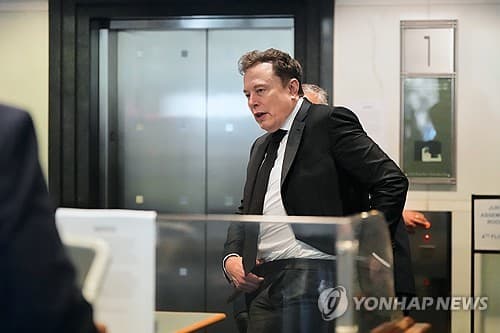
At today's trial, both the plaintiff, CEO Musk, and the defendants, CEO Altman and President Brockman, attended in suits.
Newsletter
Get key news delivered to your email every morning
to leave a comment.