
to leave a comment.
"Trump pulls out tariff card after 'Middle East war argument' with German Chancellor," observations also
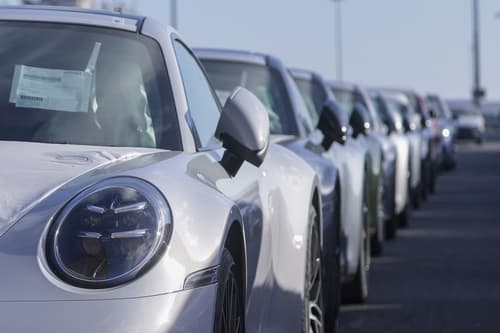
An analysis has emerged that if US President Donald Trump raises tariffs on automobiles from the European Union (EU) to 25% as announced, Germany, Europe's largest automobile producer, could incur losses of 15 billion euros (approximately 25.9 trillion won).
Moritz Schularick, director of the Kiel Institute for the World Economy (IfW) in Germany, made this estimation in an interview with Reuters on the 2nd (local time), claiming that in the long term, production losses could increase to 30 billion euros (approximately 51.9 trillion won).
IfW did not specify how these estimates were derived. The Volkswagen Group, which accounts for about 40% of German automobile production, has previously stated that the current 15% automobile tariff incurs an annual cost of 4 billion euros (approximately 6.9 trillion won). Among major automakers, Mercedes-Benz and BMW have less tariff burden than Volkswagen due to their higher local production in the US.
President Trump imposed a 25% tariff on EU-made cars in April last year, then lowered it to 15% in August of last year following an agreement with the EU. However, the previous day, he announced that the EU was not adhering to the trade agreement and that a 25% tariff would be reimposed on EU-made passenger cars and trucks starting next week.
The European Parliament only approved the trade agreement in March, amidst public opinion that the agreement was unfair and Trump's threat of additional tariffs stemming from the conflict over Greenland, a Danish territory. However, there are many doubts as to whether the agreed terms, such as the purchase of $750 billion (approximately 1,106 trillion won) worth of US energy over three years and an additional $600 billion (approximately 885 trillion won) in investment, are feasible. In 2024, the EU's imports of US energy amounted to approximately $77 billion (approximately 114 trillion won).
In Germany, there are many observations that President Trump pulled out the auto tariff increase card as a warning to Chancellor Friedrich Merz, with whom he recently had an argument over the Middle East war.
Jens Südekum, an advisor to the Minister of Finance, said, "It is well known that Trump quickly suspends or withdraws grand tariff threats," adding that it is unclear which trade agreement was not upheld or if there is a legal basis for the tariff increase. The German weekly magazine Der Spiegel commented, "Why are the European and German economies facing such a predicament now? Merz should also ask himself that question."
Newsletter
Get key news delivered to your email every morning
to leave a comment.