
to leave a comment.
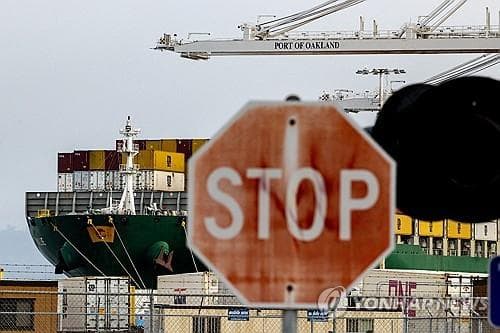
U.S. court rules 'global 10% tariff' invalid... "Confusion between balance of payments and trade balance"
Originally scheduled to end in July, 'temporary measure' nature... Preparation for high tariffs based on Trade Act Section 301
Following the U.S. Federal Supreme Court's ruling that reciprocal tariffs were illegal, the U.S. court's decision that the 'global 10% tariff' imposed to replace them is also invalid is seen as a continuous blow to the legal legitimacy of the Donald Trump administration's trade policy.
However, since the global tariffs, which are set to expire in July, were originally merely a temporary measure used by the Trump administration, and the effect of this decision is limited to the plaintiffs who filed the lawsuit, the immediate impact on the U.S. administration's tariff policy or existing tariff negotiations is expected to be limited.
It is predicted that the Trump administration will buy time by appealing this court decision and impose new tariffs based on Trade Act Section 301 and other provisions.
◇ Appeared as an alternative to illegal reciprocal tariffs... Immediately entered legal dispute
Previously, on February 20, after the Federal Supreme Court ruled that the imposition of reciprocal tariffs (country-specific tariffs) based on the International Emergency Economic Powers Act (IEEPA) was illegal, President Trump signed an executive order on the same day to impose a global 10% tariff on all countries worldwide under Trade Act Section 122.
Trade Act Section 122 grants the President the authority to impose tariffs of up to 15% for a maximum of 150 days to address large and serious balance of payments deficits.
This was the first time in 52 years since the law was enacted in 1974 that the U.S. administration actually imposed global tariffs using this law.
This executive order took effect on February 24, U.S. Eastern Time, and was specified to remain in effect until July 24.
President Trump also announced a plan to raise the tariff rate based on this provision to the legal maximum of 15%, but it did not lead to actual implementation.
When global tariffs were imposed, two small importers, including Burap & Barrel and toy importer Basic Fun, filed a lawsuit with the U.S. Court of International Trade in March, arguing that the 10% global tariff imposed by the Trump administration based on Trade Act Section 122 was illegal.
In addition, about 24 states, including Washington, also filed similar lawsuits against the Trump administration, further expanding the legal dispute.
◇ "Again, without basis..." Consecutive blows to the legitimacy of key policies
The court's judgment that the Trump administration continuously imposed tariffs without legal basis is even more painful given that President Trump is about to hold a summit with Chinese President Xi Jinping.
The New York Times (NYT) evaluated, "The ruling is a major blow that comes as President Trump prepares for a visit to China next week to discuss trade issues," adding, "With tariffs expected to be a major topic of discussion at the summit, this decision could weaken President Trump's negotiating leverage."
The British daily Financial Times (FT) also commented on the ruling, calling it "the latest legal blow to President Trump's trade policy after the U.S. Supreme Court ruled that the president cannot use emergency economic powers to impose tariffs."
The question of whether President Trump could invoke Trade Act Section 122 on the grounds of trade deficits had been raised as a controversy early on, regardless of political leanings.
Earlier, Andrew McCarthy, a former federal prosecutor, pointed out in an article for the conservative media outlet National Review that "the new tariffs are even more clearly illegal than the IEEPA tariffs."
The majority of judges on the three-judge panel of the U.S. Court of International Trade ruled today that President Trump's executive order for a global 10% tariff did not meet legal requirements.
They stated that the balance of payments deficit and the trade deficit (trade deficit) are fundamentally different concepts, and these were confused.
The balance of payments is a concept that includes all external economic transactions, such as transactions of goods, services, and income, as well as capital transfers and financial investments, whereas the trade deficit is an indicator limited to goods trade.
◇ "Tariffs originally set to end in July... Immediate ripple effects limited" analysis also
While the Trump administration is expected to appeal this decision, an analysis suggests that the immediate impact of today's ruling on tariff negotiations or the U.S. administration's tariff policy stance will be limited.
Experts view the Trade Act Section 122 tariffs as originally planned as a temporary measure and 'bridge policy' given that they automatically expire on July 24.
President Trump has also repeatedly emphasized that a new tariff system would be established soon.
The U.S. Trade Representative (USTR) has already initiated a Section 301 investigation, a preliminary procedure for imposing additional tariffs, against 16 economic entities, including Korea, concerning structural overproduction, to replace the 10% global tariffs.
At the same time, a separate Section 301 investigation has been launched against 60 economic entities suspected of not properly enforcing the ban on imports of products made with forced labor.
Trade Act Section 301 grants the administration the authority to respond to unfair, unreasonable, and discriminatory actions, policies, and practices by foreign governments that restrict or burden U.S. trade, including through the imposition of tariffs.
If the investigation concludes that a trading partner has unfair trade practices, measures such as imposing tariffs can be taken. Tariffs based on this law have no limit on their rate.
Furthermore, the court's refusal to apply the order prohibiting the 10% global tariff universally in today's decision, limiting its effect only to the plaintiffs, also restricts the ripple effect of the ruling.
The Wall Street Journal (WSJ) diagnosed today's ruling by stating, "The immediate impact of the ruling may be limited," adding, "The 10% tariff under Trade Act Section 122 was scheduled to expire in July, and the administration plans to transition to a different tariff system at that time."
It further assessed, "Also, because the court refused a universal injunction, not all importers nationwide will receive immediate relief under this ruling."
Newsletter
Get key news delivered to your email every morning
to leave a comment.