
to leave a comment.
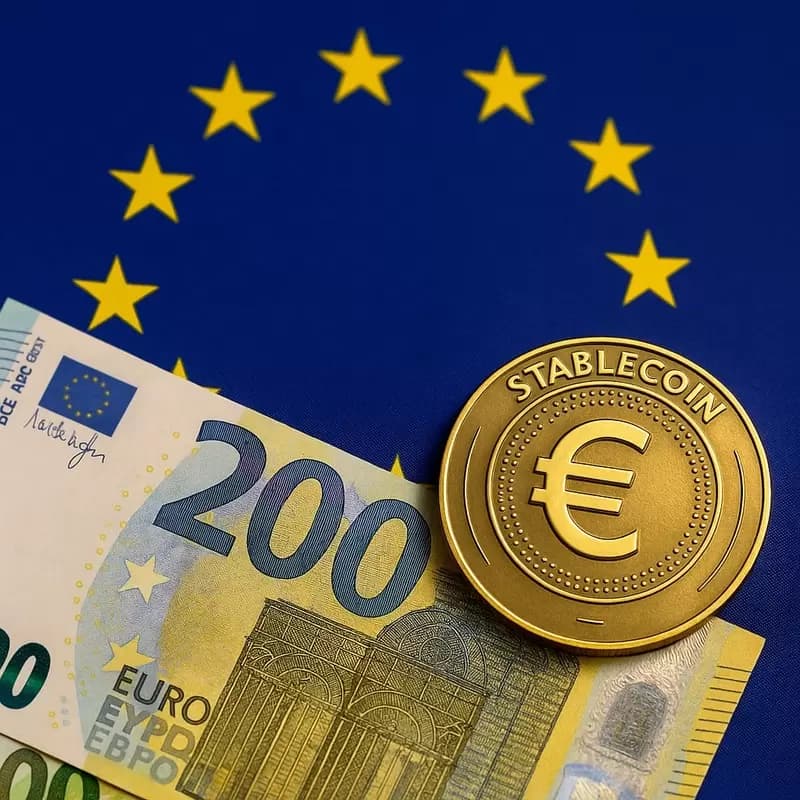
▲ Euro, Stablecoin/ChatGPT Generated Image
Major European banks are actively moving towards issuing Euro-denominated stablecoins to reduce their reliance on US dollar-based virtual assets.
Cryptocurrency specialized media outlet Cointelegraph reported on April 21 (local time) that a consortium of 12 European banks led by Qivalis has established a partnership with Fireblocks. They are developing a Euro-denominated stablecoin that complies with the European Union's Markets in Crypto-Assets (MiCA) regulation and aim to launch it in the second half of 2026.
Qivalis is a Dutch-based venture supported by major European banks including BBVA, BNP Paribas, ING, and UniCredit. This project will undergo the approval process of the Dutch Central Bank and will be issued in the form of tokens fully backed by cash-equivalent assets.
Fireblocks will be responsible for the technical infrastructure. The platform will provide tokenization technology, wallet infrastructure, and asset management tools, as well as regulatory compliance features such as identity verification and sanctions screening. This stablecoin is expected to be utilized for institutional investor-centric payments, asset management, and tokenized asset trading. Fireblocks explained that this project focuses on building a regulation-friendly payment method for European institutions.
The background behind the European financial sector accelerating the establishment of its own stablecoin is a check on the dollar-centric structure. Currently, the global stablecoin market size reaches approximately $320 billion, and over 99% of this is dollar-pegged assets. In contrast, the proportion of Euro-based stablecoins remains extremely limited.
European policy authorities are also stepping up their response. Policymakers, including the French Central Bank, are advocating for restricting the use of non-Euro stablecoins in everyday payments. This is interpreted as a measure to protect the Euro's financial sovereignty in situations of regulatory gaps or market disruption.
Global regulatory bodies, including the Bank for International Settlements (BIS), are continuously warning about the potential risks of stablecoins. It is pointed out that some dollar-based stablecoins operate not just as payment instruments but also as investment products, potentially acting as factors of cross-border financial instability. Pablo Hernández de Cos, General Manager of the BIS, has previously emphasized the need for international cooperation on stablecoin regulation.
This move by the European banking consortium is seen as a strategy to preemptively secure digital assets with legal stability within this trend of strengthening regulation. If the Euro-denominated stablecoin successfully settles in the market, the possibility of structural changes in the dollar-centric virtual asset ecosystem is also raised.
In particular, as trading pairs for major assets like Bitcoin (BTC) diversify, changes in the market liquidity structure are also expected. The banking consortium pursuing the project plans to enhance its completeness by conducting technical verification and regulatory compliance in parallel until its official launch in 2026.
Coupled with the full implementation of the Markets in Crypto-Assets (MiCA) regulation, Europe's digital finance strategy is expected to accelerate further. This attempt is seen as more than just a product launch, but rather a signal for the restructuring of the global financial order.
*Disclaimer: This article is for investment reference only, and we are not responsible for any investment losses based on it. The content should be interpreted for informational purposes only.*
Newsletter
Get key news delivered to your email every morning
to leave a comment.