
to leave a comment.
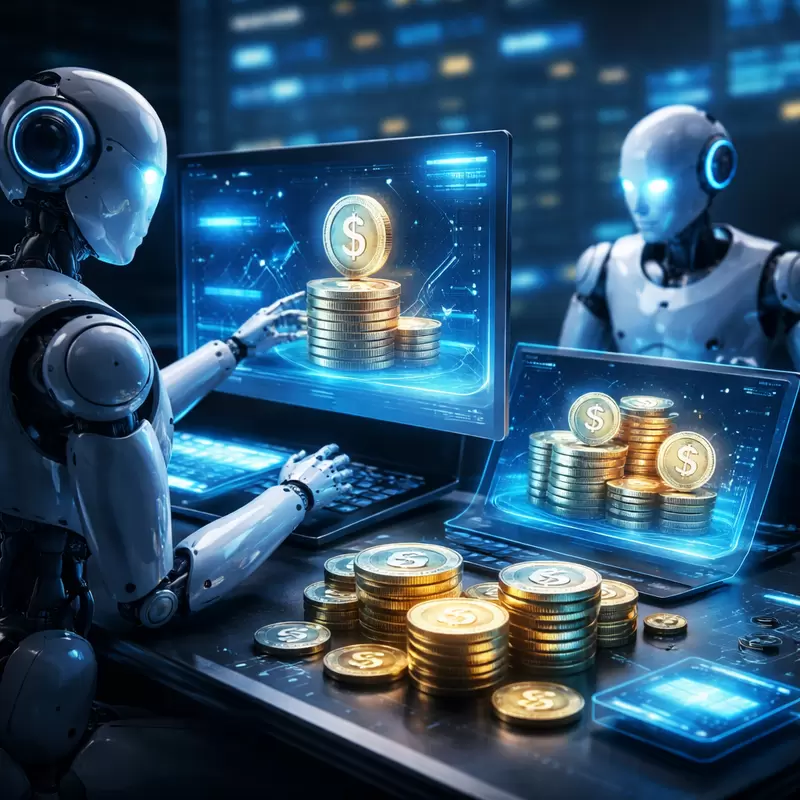
▲ Artificial Intelligence (AI), Stablecoin, Cryptocurrency Payment/AI Generated Image
With the advent of the machine economy, where Artificial Intelligence (AI) agents autonomously make payments and transactions without human intervention, virtual assets have finally reached a historical turning point to prove their reason for existence.
Louis Raskin, host of the cryptocurrency YouTube channel Coin Bureau, analyzed in a video released on April 30th (local time) that the autonomous AI agent-only payment systems introduced by Stripe and Coinbase will overcome the limitations of traditional finance and create a new market worth $1.7 trillion. Existing financial systems cannot handle the immediate settlements and micro-payments required by AI agents, making virtual assets emerge as the only solution.
Currently, AI agents face difficulties using traditional payment networks due to credit card fees and complex KYC procedures. To address these issues, Louis explained that Coinbase has introduced the X42 standard, which revives HTTP 402 code, an early design of the internet. This system, with participation from Google, Amazon Web Services, and Visa, is establishing itself as a formal financial infrastructure.
The benefits of the machine economy are expected to be concentrated in specific networks with technological strengths. Solana (SOL) processed 25.3 billion transactions in the first quarter alone, securing stablecoin liquidity that surpasses Ethereum (ETH). Coinbase's Layer 2 network, Base, also dominates 90% of X42 system settlements, leading an AI agent-friendly environment.
However, the centralized control over stablecoins, a core asset of the machine economy, is identified as a challenge to be addressed. Tether and Circle have the authority to freeze wallets at the code level and recently froze USDT worth $344 million. Louis pointed out, "The most open networks are being built on the most controlled assets," warning of the risk that agent transactions could be unexpectedly paralyzed.
If AI agents take the lead in financial activities, humans may be relegated to observers in their own economic lives. Forester predicts that human visits to banking websites will decrease by 20% by the end of this year, while machine-driven traffic will increase by 40%. As the movement of funds beyond human control becomes commonplace, discussions surrounding financial sovereignty and data privacy are expected to accelerate.
*Disclaimer: This article is for investment reference only and we are not responsible for any investment losses based on it. The content should be interpreted for informational purposes only.*
Newsletter
Get key news delivered to your email every morning
to leave a comment.