
to leave a comment.
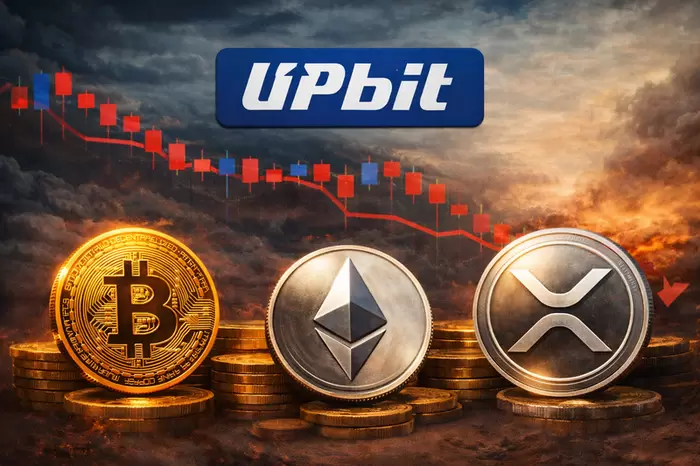
[Upbit Market Report] Bitcoin barely holds 105 million KRW amid fears of US-Iran military conflict... Bloodbath in the crypto market
▲ Upbit Market Report: Why Bitcoin, XRP, Ethereum all hesitated together, is it a simple correction or a direction change?/AI-generated image ©
As peace talks between the US and Iran head for a breakdown and military tensions surrounding the Strait of Hormuz reach their peak, a fierce selling storm is sweeping through the domestic virtual asset market. With the US's maritime blockade measures and Iran's warnings of military retaliation intertwining, creating an imminent fear of war that grips the market, major assets such as Bitcoin, Ethereum, and XRP (Ripple), which are leading cryptocurrencies in the Upbit KRW market, are all collapsing simultaneously.
As of 8:08 AM on the 13th, according to Upbit, the largest domestic virtual asset exchange, Bitcoin plummeted 2.66% from the previous day to trade at 105,676,000 KRW, falling significantly from the 110 million KRW line. Ethereum, the second-largest by market cap, also recorded a 3.54% drop to 3,272,000 KRW, widening its decline. In addition, XRP fell 1.74% to 1,979 KRW, and Solana dropped 3.17% to 122,100 KRW, indicating an overall market crash. The Upbit Composite Index (UBMI) and Altcoin Index (UBAI), which show the overall market trend, also plunged by 2.34% and 2.84% respectively, reflecting frozen investor sentiment. On the other hand, Upbit's 24-hour trading volume increased by 8.3% compared to the previous day, according to CoinGecko data, a virtual asset market relay site, showing intense turnover among investors engaged in panic selling.
The decisive factors that plunged the market into panic are the failed peace talks and the US's ultra-strong sanctions card. After 21 hours of the first peace talks between the two countries in Pakistan, which failed to narrow differences on issues such as the opening of the Strait of Hormuz, the US Central Command abruptly announced a complete blockade of all maritime traffic entering and exiting Iranian ports starting at 10:00 AM (Eastern US time) on the 13th. This move is interpreted as an attempt to completely cut off Iran's oil export funding lifeline and escalate pressure to its highest level.
As Iran's Islamic Revolutionary Guard Corps threatened strong military retaliation against the US blockade, fears of escalation grew uncontrollably. Iran warned that the approach of warships to the Strait of Hormuz itself would be considered a violation of the truce, and if enemies miscalculate, the strait would become a "whirlpool of death." As the possibility of armed conflict became a reality, the risk-averse sentiment of individual investors, who had been observing cautiously, reached its peak, leading to a large-scale sell-off during trading hours.
The fate of the virtual asset market in the future depends entirely on whether a physical clash between the two countries occurs in the Strait of Hormuz. If the US blockade leads to actual operations and Iran responds with force as threatened, the entire global financial market will be shaken, and Bitcoin is expected to break through key support levels one after another and fall into a deep bear market. For the time being, rather than premature buying, it is time to closely monitor the war situation and focus on thorough cash securing and risk management.
*Disclaimer: This article is for investment reference only, and we are not responsible for any investment losses based on it. The content should be interpreted for informational purposes only.*
Newsletter
Get key news delivered to your email every morning
to leave a comment.