
to leave a comment.
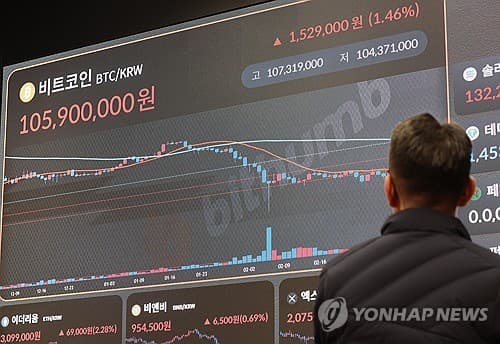
"Bitcoin mispayment due to lack of internal control mechanisms"
"Stablecoins also experience sharp price fluctuations… need to strengthen exchange supervision"
The Bank of Korea proposed on the 13th that virtual asset exchanges should also consider introducing a mechanism similar to the 'circuit breaker' used by the Korea Exchange.
The BOK stated this in its '2025 Payment and Settlement Report' released on the same day, recounting the Bitcoin mispayment incident at Bithumb, a domestic virtual asset exchange.
A circuit breaker is a mechanism that halts trading when asset prices experience rapid fluctuations. At the Korea Exchange, if the KOSPI or KOSDAQ index falls by more than 8% compared to the previous day and remains so for 1 minute, trading is suspended for 20 minutes.
The Bithumb Bitcoin mispayment incident, which occurred on the evening of February 6, was an accident where an employee mistakenly entered the wrong unit while attempting to pay 620,000 KRW worth of Bitcoin as a customer event prize, resulting in the payment of 620,000 Bitcoins (worth approximately 60 trillion KRW).
Immediately after the incident, some customers massively sold the mispaid Bitcoins, causing the price of Bitcoin on Bithumb to temporarily plummet from 98 million KRW to 81 million KRW. Other users suffered damages due to panic selling and automatic sales. There was also forced liquidation of Bitcoin-backed loans.
The BOK pointed to "the absence of internal control mechanisms to prevent operational risks" as the core cause of this accident.
At the time, at Bithumb, a person in charge could pay Bitcoin without approval from a superior or verification from an internal monitoring department. Furthermore, the structure was lax, with internal ledgers and actual blockchain wallet balances being reconciled only once a day.
In particular, it took 20 minutes to recognize the occurrence of the accident and an additional 20 minutes for the exchange to respond, leading to significant damage. Bithumb was operating its own abnormal transaction detection system (FDS), but it did not function properly.
Therefore, the BOK argued, "When paying cash or virtual assets to customers, even if an input error occurs, a double-check system must be put in place to proactively recognize and control it systemically."
Furthermore, it emphasized, "An IT (information technology) system is also needed that can ensure the consistency between the exchange's virtual asset internal ledger and the balance on the blockchain is confirmed in real-time and automatically, and that can prevent mispayments due to human error in advance."
The proposal to introduce devices like circuit breakers is an extension of this.
The BOK added, "When the Digital Asset Framework Act, currently being discussed by the government and the National Assembly, is enacted, these matters should be reflected in the law to strengthen the safety and transparency of virtual asset exchange operations."
Separately, the BOK repeatedly called for strengthened regulation of stablecoins, citing the sharp fluctuations in stablecoin prices that occurred after US President Donald Trump announced new tariffs on China on October 11 last year.
At that time, USD1 soared to 10,000 KRW on domestic exchanges Upbit and Bithumb, and USDT surged to 5,750 KRW on Bithumb.
Regarding the cause, the BOK explained, "As the prices of major virtual assets plummeted, demand increased for selling them and buying relatively safe stablecoins," adding, "Demand for buying dollar stablecoins as a dollar substitute also joined in."
It further explained, "In the case of Bithumb, which provided USDT lending services, as the USDT price increased and customer collateral ratios decreased, the exchange sold collateral assets and purchased USDT at market price, leading to forced liquidations, which further surged the USDT price."
In conclusion, it stated, "There is a need to strengthen supervision over excessive leverage (borrowing) and exchange lending activities that could undermine the soundness of households and financial institutions."
Newsletter
Get key news delivered to your email every morning
to leave a comment.