
to leave a comment.
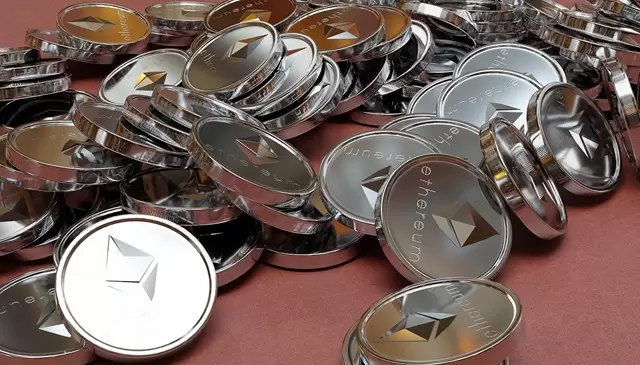
▲ Ethereum (ETH)
Ethereum (ETH) has caused investor fatigue with its sluggish price performance over the past five years, but it is now being discussed again as the most hated contrarian asset, driven by record-high network usage, falling fees, and discussions about privacy upgrades.
Lark Davis, host of the crypto podcast The Lark Davis Show, stated in an episode on May 30 (local time) that while Ethereum has been a disappointing asset in terms of price performance over the past five years, its internal network metrics and technical roadmap paint a completely different picture. He said, “Ethereum is not a scam. It's just trading like one.”
Davis pointed out that long-term Ethereum holders endured extreme volatility and stress, yet their price performance remained virtually at break-even levels. He also drew a comparison, noting that during the same period, Nvidia investors grew $1,000 to $18,000, and Sandisk holders saw a 30x return in just one year. He criticized Ethereum, stating that while it surpassed its previous all-time high in the last cycle, it only did so by $50 to $100 above the prior peak, indicating an excessively low risk-to-reward ratio.
He also viewed the continuous selling of Ethereum by the Ethereum Foundation and the departure of key ecosystem supporters as factors shaking investor confidence. He explained that despite prominent Ethereum bull Tom Lee investing billions of dollars, the price did not move significantly, and even influencers who had long described Ethereum as ultrasonic money and the future of finance are turning their backs.
However, Davis emphasized that despite the price sluggishness, the actual network fundamentals are improving. According to Token Terminal data, Ethereum's monthly transaction count has surpassed 70 million, reaching an all-time high. He explained that the burden of fees, which used to be around $50 for a simple swap, has significantly decreased, with average fees now at 0.5 cents and complex DeFi transaction costs down to between 5 and 10 cents.
In the technical roadmap, EIP8182 was presented as a key variable. Davis reported that Ethereum developers are discussing native privacy solutions directly embedded in the protocol, rather than relying on third-party mixers or external tools. He assessed that if EIP8182 is introduced, Ethereum could emerge as the world's largest privacy chain, and when combined with real-world asset tokenization, account abstraction, chain abstraction, and AI agent integration, it could become a core infrastructure for the next phase of adoption.
Davis acknowledged the risk that Solana (SOL) could continue to erode Ethereum's market share and that Ethereum might become the MySpace of smart contract platforms. However, he suggested that now, with price charts and investor sentiment close to their worst, might be the time to revisit assets with strong fundamentals. His conclusion is that while Ethereum has been an overlooked asset for five years, its network usage and technological improvements are creating reasons to pay attention again.
*Disclaimer: This article is for investment reference only, and we are not responsible for any investment losses based on it. The content should be interpreted for informational purposes only.*
Newsletter
Get key news delivered to your email every morning
to leave a comment.